

Short answer: an armbinder is a bondage restraint that holds both arms together behind the back in one sleeve. It is usually made of leather, closes with lacing, a zip or buckled straps, and is held in place by shoulder straps. This guide covers the main types, how an armbinder should fit, how to measure for one, how to put it on and how to use it safely.
What is an armbinder?
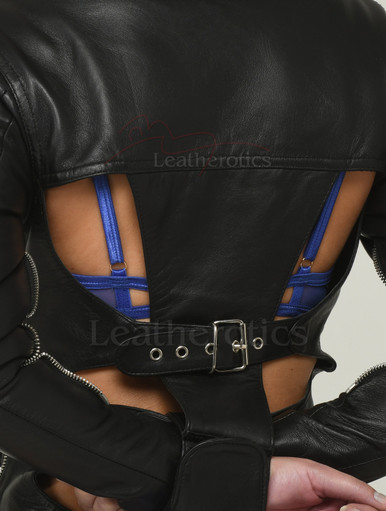
An armbinder (also called a monoglove or single sleeve) is a sleeve or set of straps that encloses both arms from the hands to above the elbows and keeps them pressed together behind the back. Unlike wrist cuffs, which only hold the wrists, an armbinder controls the whole forearm and upper arm, so the position is much more restrictive and the posture more upright.
A typical leather armbinder has four parts:
- The sleeve. A tapered tube of leather that is narrow at the fingertips and wider at the elbows.
- The closure. Lacing, a zip or a series of buckled straps that tighten the sleeve around the arms.
- The harness. Shoulder straps that cross over or around the chest. Without them the sleeve slides down the arms.
- The D-ring. A metal ring at the fingertip end, used to attach the armbinder to a point or to other restraints.
Types of armbinders
All of the armbinders below are handmade from full-grain leather and lined. Prices are in US dollars at the time of writing.
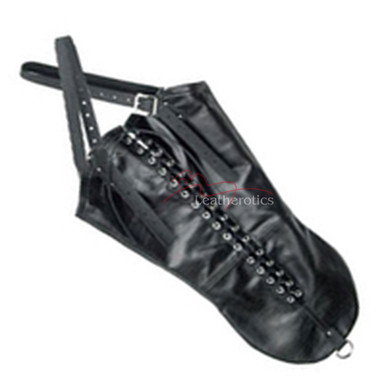
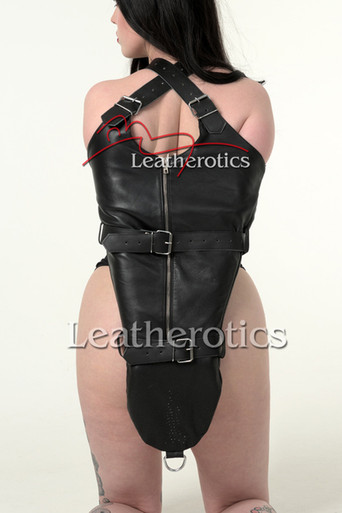
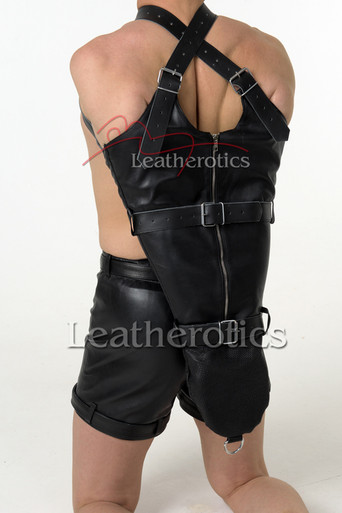
Lace-up, zip or straps: which closure?
- Lacing lets you adjust the fit section by section, which suits arms that are wider at the top than average. It takes longest to put on and take off.
- A zip goes on in seconds, so it is the easiest choice for a first armbinder and the quickest to release. Adjustable belts over the zip take up any slack.
- Buckled straps spread the hold across several points and can usually be locked.
Armbinder vs other arm restraints
An armbinder is the most demanding way to restrain the arms because it brings the elbows toward each other. If your shoulders do not allow that comfortably, one of these gives a similar feeling of restriction with less strain:
| Restraint | Arm position | Shoulder demand | Best for | From |
|---|---|---|---|---|
| Armbinder | Arms straight, together behind the back | High | Experienced wearers with flexible shoulders | $95 |
| Back binder | Both arms enclosed together at the back | High | Full arm enclosure with a straitjacket-style fit | $159 |
| Bolero straitjacket | Sleeves cuffed and zipped, arms in front or behind | Medium | Longer wear; position can be changed | $235 |
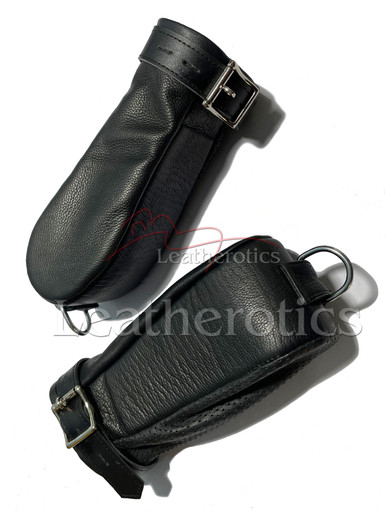
| Bondage mittens | Hands closed into fists, arms free | Low | Beginners; combining with cuffs | $89 |
| Wrist cuffs | Wrists joined, elbows free | Low | Short scenes and first-time restraint | See range |
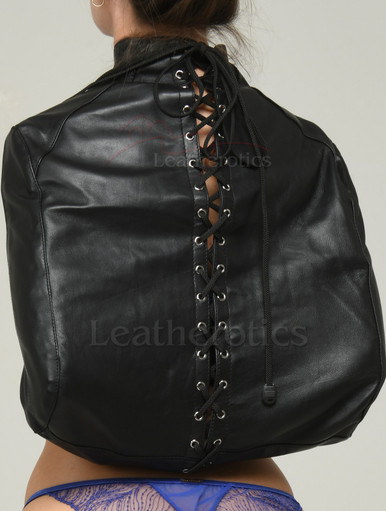
Can you wear an armbinder? Check your shoulders first
How close your elbows can get behind your back depends on your shoulder mobility, not on effort, and it varies a lot from person to person. Before you buy, stand up straight, put your hands behind your back and gently bring the elbows toward each other without help. Stop where it stays comfortable and ask a partner to note the gap.
- If the elbows meet or nearly meet without strain, a standard armbinder should be comfortable.
- If there is a clear gap, choose a made-to-measure armbinder cut to that gap, or one of the gentler restraints above. Never use lacing or straps to force the elbows closer than they go on their own.
How to measure for an armbinder
The circumference measurements in our size charts are taken around both arms held together behind the back (that is why the numbers are much larger than a single arm), so you will need a partner and a soft tape measure. Hold your arms in the position you will wear them, as close as is comfortable, and take these measurements:
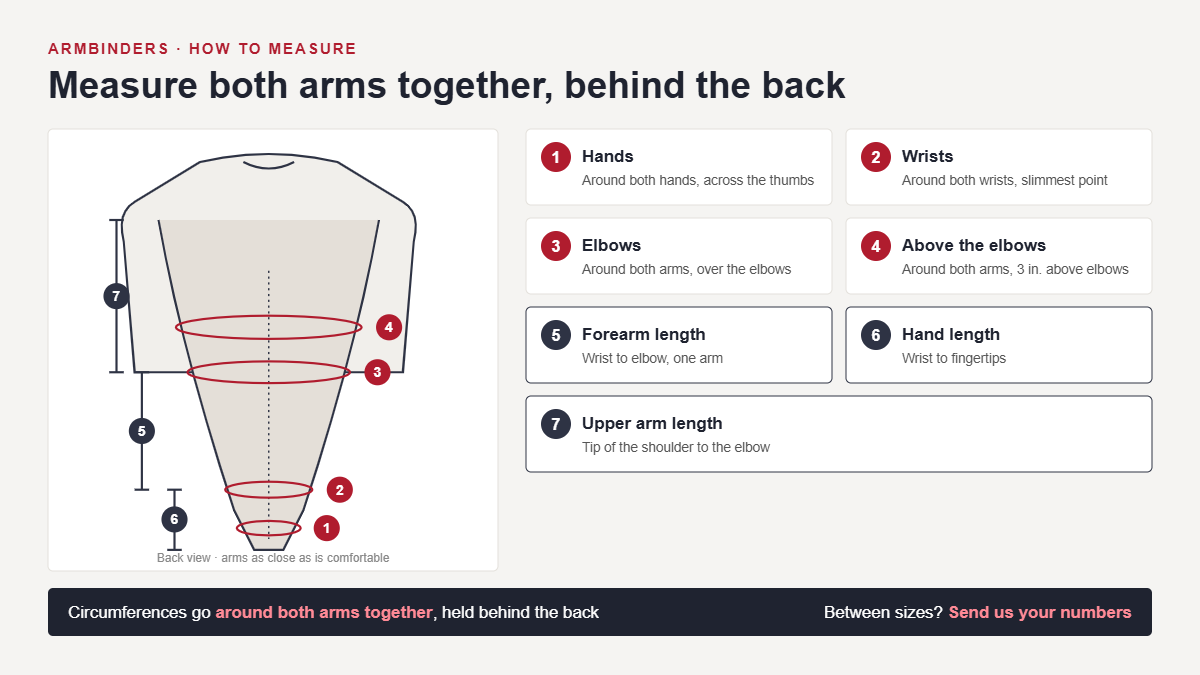
- Hands: around both hands at the widest point, across the thumbs.
- Wrists: around both wrists at the slimmest point, just above the palms.
- Elbows: around both arms directly over the elbow bones.
- Above the elbows: around both arms 3 inches above the elbows.
- Forearm length: from the wrist to the elbow on one arm.
- Hand length: from the wrist to the fingertips.
- Upper arm length: from the tip of the shoulder to the elbow.
Compare your numbers with the chart for the style you want. If you fall between two sizes or are not sure, send us your measurements before you order.
Armbinder size charts
Measurements in inches, around both arms together, from our product size charts.
Lace-up armbinder (women's fit)
| Measurement | S | M | L | XL |
|---|---|---|---|---|
| Hands (widest point) | 15" | 18" | 19" | 22" |
| Wrists (slimmest point) | 16" | 18" | 20" | 24" |
| Elbows (over the bone) | 23" | 24" | 27" | 32" |
| 3 inches above the elbows | 24" | 29" | 33" | 37" |
Zip and strap armbinder (women's fit)
| Measurement | S | M | L | XL |
|---|---|---|---|---|
| Hands (widest point) | 14" | 15" | 16" | 17" |
| Wrists (slimmest point) | 14" | 15" | 16" | 17" |
| Elbows (over the bone) | 26" | 28" | 31" | 33" |
| 3 inches above the elbows | 30" | 33" | 35" | 38" |
| Elbow to wrist | 12" | 13" | 13.5" | 13.5" |
| Wrist to fingertips | 8" | 8" | 8" | 8" |
Men's armbinder
| Measurement | S | M | L |
|---|---|---|---|
| Hands (widest point) | 15" | 16" | 16" |
| Wrists (slimmest point) | 15" | 16" | 17" |
| Elbows (over the bone) | 29" | 30" | 32" |
| 3 inches above the elbows | 33" | 35" | 37" |
| Elbow to wrist | 12" | 13" | 13" |
| Wrist to fingertips | 7" | 8" | 8" |
| Shoulder tip to elbow | 13" | 14" | 14" |
Outside these charts, or with a large gap between the elbows, order made to measure or send us your measurements and we will advise.
How to put on an armbinder
- Loosen everything first. Open the lacing fully, undo the zip or straps and remove rings and watches from the wearer.
- Slide the arms in. With the arms behind the back, guide both hands down to the fingertip end of the sleeve.
- Fit the harness. Bring the shoulder straps over the shoulders and fasten them so the sleeve cannot slide down. They should be snug but must not press into the armpits.
- Close from the hands up. Tighten the lacing, zip or straps a little at a time from the wrists toward the elbows, keeping the tension even.
- Check the fit. You should be able to slide two fingers under the edge of the sleeve, the fingers should stay warm and pink, and the wearer should have no tingling.
Armbinder safety
Armbinders hold the arms in a position that loads the shoulders and can press on the nerves and blood vessels of the arms. Used carefully, that risk stays low:
- Never leave the wearer alone. Someone unrestrained must stay with them for the whole time.
- Keep safety shears within reach. Lacing can be cut in seconds if you need to release quickly.
- Start short. Begin with a few minutes and build up over several sessions rather than in one.
- Check the hands every few minutes. Release immediately at numbness, tingling, coldness, a blue or white color, weakness or sharp pain. Nerve symptoms can start quickly.
- Do not force the elbows together. Tighten only to where the shoulders sit comfortably.
- Stay low. The wearer cannot catch a fall, so keep them seated or kneeling, or support them when standing.
- Agree a non-verbal signal. If speech is limited (for example with a hood or gag), use a sound or a dropped object as the stop signal.
This is general information, not medical advice. Anyone with shoulder, nerve or circulation problems should speak to a doctor before using arm restraints.
Looking after a leather armbinder
Wipe the lining with a damp cloth after each use and let it air-dry away from direct heat. Condition the outer leather regularly so the sleeve stays supple and the lacing holes do not crack, and store it flat or loosely rolled with the laces open. Our leather care guide covers cleaning and conditioning in detail.
Browse the full armbinder collection, or pair an armbinder with a leather harness or straitjacket.
Armbinder FAQs
What is an armbinder?
An armbinder is a bondage restraint that holds both arms together behind the back in a single sleeve, usually made of leather. Shoulder straps stop it sliding down, and lacing, a zip or buckled straps close it around the arms.
Is an armbinder the same as a monoglove?
Yes, the names are used for the same restraint. Monoglove usually means a close-fitting sleeve; armbinder is the general term and also covers strap and zip styles.
Are armbinders hard on the shoulders?
They can be, because they draw the elbows toward each other behind the back. How close the elbows can comfortably get varies from person to person, so check your range before you buy and never force the elbows together.
How long can you wear an armbinder?
There is no safe fixed time. Start with a few minutes, check the hands and fingers every few minutes, and release immediately at any numbness, tingling, coldness, color change or sharp pain.
What size armbinder should I get?
Measure around both arms held together behind the back at the hands, wrists, elbows and 3 inches above the elbows, then compare with the size chart on the product page. Between sizes or outside the chart, choose made-to-measure.
Can men wear armbinders?
Yes. Men usually need a longer and wider sleeve; our men's armbinder is cut for a male frame and has perforated panels and crossed chest straps.